
 Verified organizations · every species
If something has been reported, you’ll know the question exists.
Search a name and see what has been reported — the tier we assigned after review, the evidence behind it, and the staff member who signed it. Or nothing on file, which is also an answer. It doesn’t decide anything. That’s your call, and always was. Dogs, cats, birds, rabbits, horses, reptiles — the record covers every species.
Access is granted after verification, never sold. There is no self-serve signup. Verified organizations file reports with no filing contribution.
What membership actually gets you
Only criminal convictions are public record. Everything short of one — the surrender pattern, the neighbour’s complaint, the seizure that never reached a courtroom — disappears. This is where it doesn’t.
petOffenders information is an additional suggestion to help your organization vet people for the adoption, sale and care of pets — the final decision always remains yours.
Reports that never reached a court
Screened complaints, seizures and surrender patterns — the history that exists but was never public record.
Verified court convictions
Convictions and possession bans, cited to their docket and confirmed by a human before publication.
Every species you place
Dogs and cats, but also horses, birds, rabbits, reptiles and small mammals. Records are tagged by species.
A logged, defensible file
Every lookup is written to your organization's history with a timestamp and the member who ran it.
Area intelligence
Tier-coloured incident mapping for your service area — an organization privilege the public never sees.
Contribute what you know
File Official Organization reports and observations — with no filing contribution — so the next shelter isn't guessing either.
Three tiers, and you see all of them.
The public never sees a tier. You do — with the evidence count, the date we reviewed it, and the name of the staff member who signed it.
A report is not a finding of guilt. A tier describes the evidentiary state of our file. It is not a finding of fact, an adjudication, or a statement by petOffenders that the subject engaged in the alleged conduct.
Uncorroborated
One report, no supporting evidence yet. Context for your file — never grounds to refuse on its own.
Corroborated
Photographic evidence, an independent second report, or documented agency action. Staff-signed and dated.
Court record
A conviction or court-ordered possession ban, cited to its docket and human-verified. Blocks placement.
The FBI counts the incidents. It never names anyone.
Since 2016 animal cruelty has been its own offense in the FBI’s National Incident-Based Reporting System, recorded as a crime against society. For the first time it made animal abuse countable at a national scale — but the data is stripped of identities before publication.
These four categories account for 20,252 of the 22,418 incidents. The remainder were reported without a usable offense subtype.
Agency participation in NIBRS grows every year, so an increase from one year to the next may reflect more agencies reporting rather than more cruelty. These are only the cases reported by participating agencies, so the real number is higher — but the trend should be read with caution.
NIBRS counts incidents. It never names people — the data is stripped of identities before publication. That is why, until now, an organization about to place an animal had nowhere to look.
Source: FBI Crime Data Explorer (NIBRS, 2023 data year), compiled by the Animal Welfare Institute — Center for the Study of NIBRS Animal Cruelty Data. Figures reflect agencies participating in NIBRS and therefore undercount the true total.
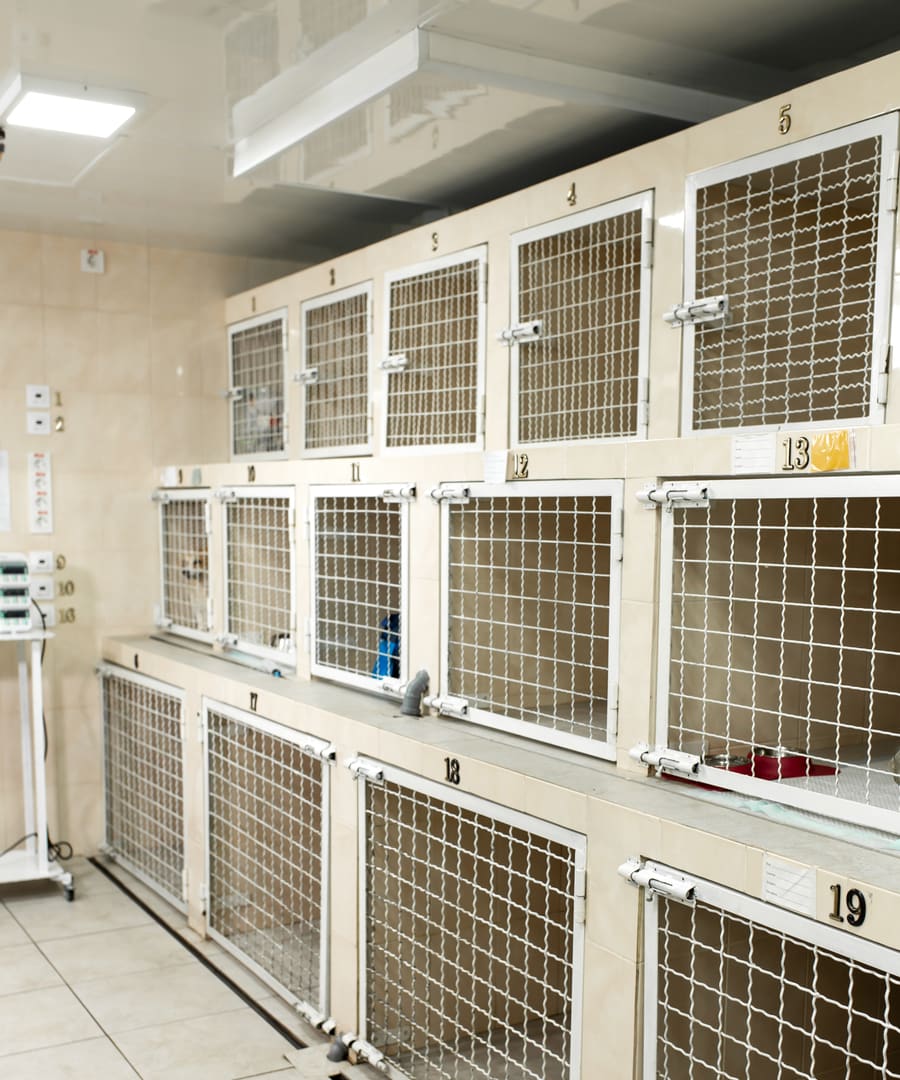
We will come to your facility.
A registry is only worth the standard of the people allowed to read it. Access is granted in four steps, and the last one happens in person.
Apply once. Check every placement after that.
Shelters, rescue organizations and veterinary clinics anywhere in the United States. Breeders may apply and are additionally verified against state licensing and inspection records. Applications are reviewed within ten business days.